OpenAI has been releasing new ChatGPT models at a fast pace. In roughly a month we've seen GPT-6 Astra, GPT-6 Sol and Luna, and now GPT-6.1 Sol. If you're wondering which one matters for you, this guide covers what's new and who can use it.
Understanding the Sol, Terra and Luna names
Since GPT-5.6, OpenAI has used a simple naming system. The number is the model generation, and the names Sol, Terra and Luna are lasting capability tiers that are updated on their own schedule. Astra sits above them as the top-end flagship.
GPT-6.1 Sol: near-flagship performance at a lower price
Announced at DevDay on September 29, GPT-6.1 Sol is an upgrade to GPT-6 Sol, which launched only a week earlier. OpenAI says it nearly matches GPT-6 Astra on agentic coding, computer use and professional work, at one-fifth of Astra's standard token prices.
- Coding: on the DeepSWE v1.1 benchmark it scores 6.4 percentage points above GPT-6 Sol's best result, at lower cost.
- Accuracy: at low reasoning effort, the share of answers with a factual error dropped from 11.4% to 7.7%. OpenAI notes these test prompts were deliberately hard.
- Pricing: reported at $2 per million input tokens and $10 per million output tokens, with cached input at $0.10.
- Speed: reports also mention a new Ultrafast tier of around 300 tokens per second.
Availability: GPT-6.1 Sol is live for Plus, Pro, Business, Enterprise and Edu users in ChatGPT Work and Codex, and in the API. It is not yet in the regular ChatGPT chat interface.
GPT-6 Sol and Luna
On September 22, OpenAI released GPT-6 Sol and GPT-6 Luna as its newest general-purpose models. Sol is built for complex coding and agentic workflows, while Luna is the lighter tier aimed at everyday use.
More control over how ChatGPT thinks
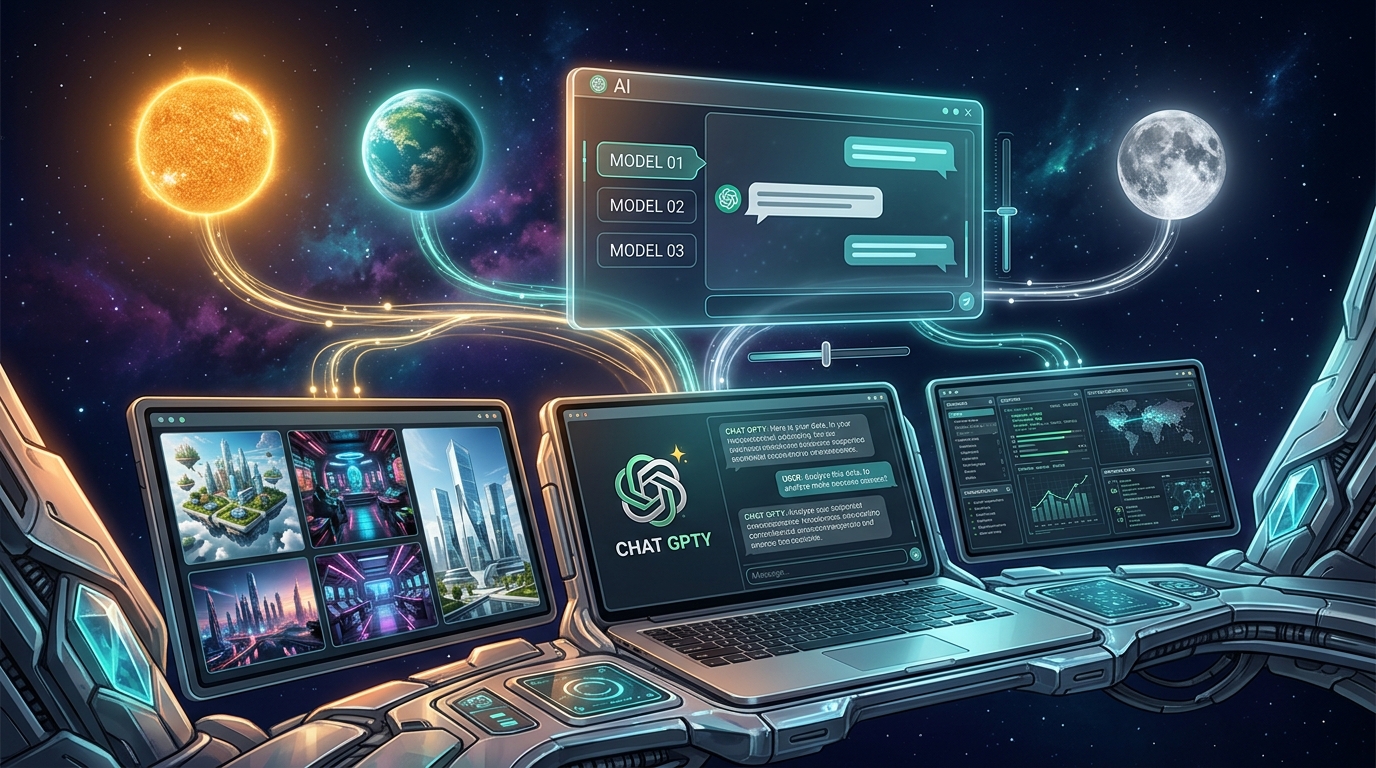
Plus and Pro users can now use a slider to choose how much thought ChatGPT puts into each response. Quick questions can stay fast, and harder problems can get more reasoning. OpenAI also announced unlimited text chats and a Think button for harder questions on those plans, subject to abuse guardrails. Free and Go users get Luna as their default model.
Other new ChatGPT features
- Quizzes: ask ChatGPT to quiz you on a topic and answer inside the conversation. It's available on all consumer plans and Edu on web and mobile.
- Project memory: in eligible unshared projects you can switch between default and project-only memory without starting over.
- Security history: go to Settings > Security to review recent sign-ins, sign-outs and changes to MFA and passkeys.
- Admin controls: Business and Enterprise admins can manage whether ChatGPT Sites can use members' connected apps and whether applications can access ChatGPT Ads. Both are off by default during the preview.
- Ads expansion: ChatGPT Ads has expanded to Southeast Asia and Taiwan.
Which model should you use?
- Everyday chat and writing: Luna on the Free and Go plans is enough for most people.
- Harder reasoning: Plus and Pro users can turn up the thinking slider.
- Coding and agent workflows: try GPT-6.1 Sol in Codex or ChatGPT Work.
- Maximum capability: Astra is the flagship, but it costs about five times more per token than GPT-6.1 Sol.
Final thoughts
The trend is clear: near-flagship intelligence is getting cheaper, and users get more say over speed versus depth. Features and limits differ by plan and region, so check the ChatGPT release notes for your account.