
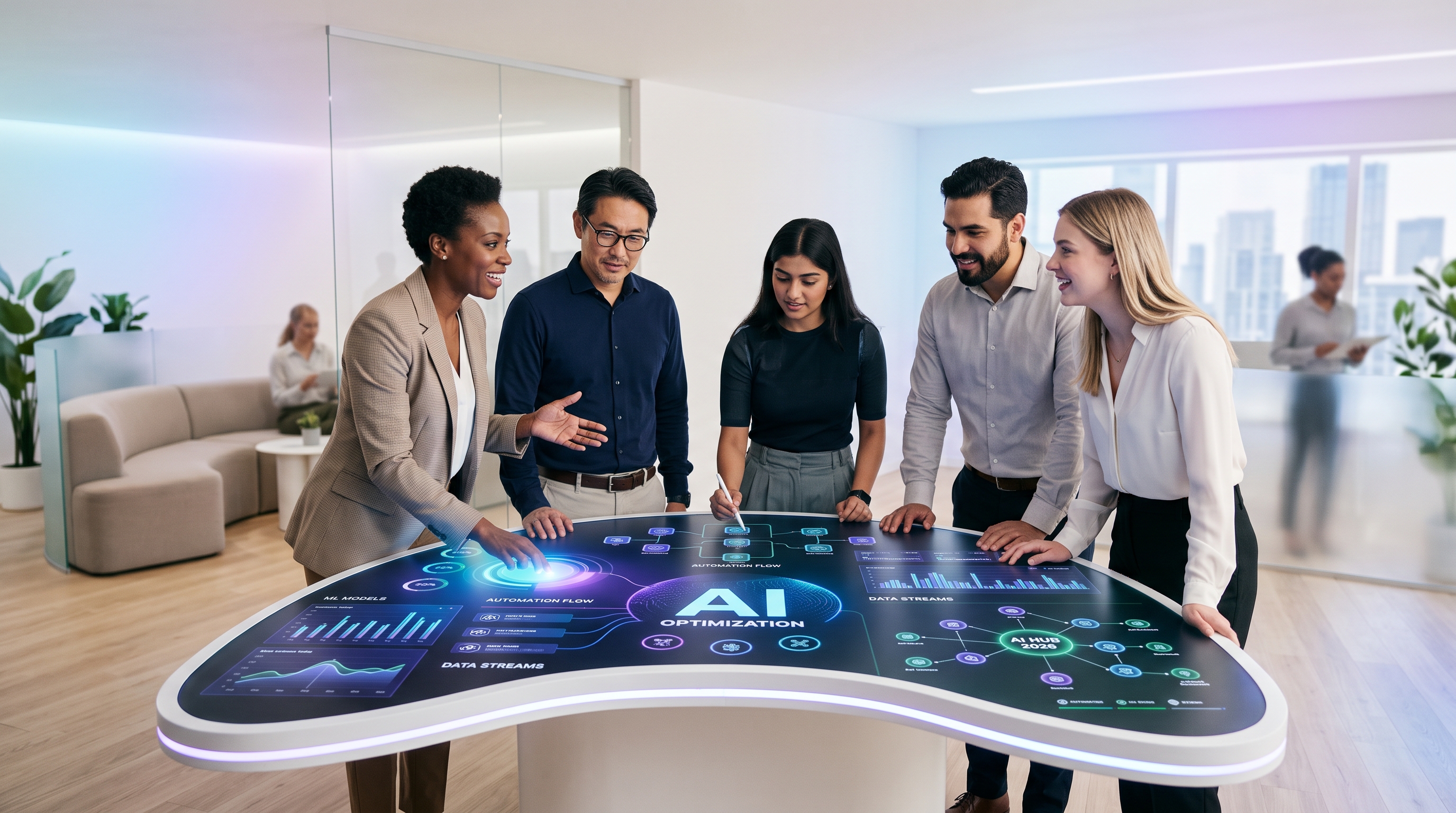
Artificial intelligence is changing how companies build products, solve problems, communicate with customers, and make decisions. As AI technology continues to evolve, companies are not only investing in better tools—they are also investing in people.
Upskilling is becoming an important part of staying competitive in an AI-driven workplace.
Why AI Upskilling Matters
AI tools are becoming easier to access, but using them effectively still requires knowledge and practical skills. Employees need to understand where AI can help, how to use it effectively, and where human judgment remains essential.
For companies, AI upskilling can help teams:
- Adapt to rapidly changing technologies
- Improve productivity
- Build better AI-powered products
- Reduce repetitive work
- Improve customer support
- Discover new business opportunities
AI Skills Are Not Only for Developers
AI training is often associated with developers and technical teams, but AI is becoming relevant across almost every department of a modern organization.
Product Teams
Product teams can use AI for research, customer insights, documentation, product planning, and workflow automation.
Marketing Teams
Marketing professionals can use AI to research audiences, generate content ideas, analyze campaigns, and create more personalized communication.
Customer Support Teams
Support teams can use AI assistants to organize customer questions, summarize conversations, identify recurring issues, and improve response workflows.
Sales Teams
Sales professionals can use AI for lead research, personalized outreach, meeting summaries, follow-ups, and organizing customer information.
HR and Operations
HR and operations teams can use AI to organize information, automate repetitive processes, create internal documentation, and improve everyday workflows.
From AI Awareness to AI Fluency
Simply knowing that AI exists is no longer enough. Teams need practical knowledge about how AI can be applied to their specific roles.
AI fluency means understanding AI capabilities, choosing appropriate tools, creating useful workflows, and recognizing the limitations of AI-generated results.
This does not mean everyone needs to become an AI engineer. Instead, employees can develop AI skills that match their responsibilities.
A designer might learn AI-assisted design workflows. A marketer might use AI for research and content planning. A developer might explore AI coding assistants and APIs. A support specialist might use AI to analyze customer issues more efficiently.
Building a Culture of Continuous Learning
AI technology changes quickly, so a single training session is rarely enough. Companies can create a culture where employees continuously learn, experiment, and share knowledge.
Some practical approaches include:
- Internal AI workshops
- Knowledge-sharing sessions
- AI experimentation projects
- Online courses and learning resources
- Team challenges
- Internal documentation and guides
- Mentorship programs
- Regular discussions about emerging AI tools
Upskilling Can Benefit Employees Too
AI upskilling is not only valuable for companies. Employees, students, freelancers, and job seekers can also benefit from developing practical AI skills.
For job seekers, simply writing “AI” on a CV may not be enough. A stronger approach is to demonstrate how AI was actually used to solve a problem, improve a workflow, build a project, or create something useful.
The most valuable AI skill is not simply knowing which tools exist—it is knowing how to use them effectively to solve real problems.
The Future Is Human + AI
AI is changing the workplace, but successful AI adoption is not only about automation. It is also about combining human creativity, communication, critical thinking, judgment, and problem-solving with AI capabilities.
Companies that encourage their teams to experiment, learn, and adapt can create an environment where AI becomes a practical part of everyday work.
Final Thoughts
AI is evolving quickly, and companies cannot predict every technology their teams will need in the future.
What they can build is a culture where people are encouraged to learn, experiment, and continuously improve.
Upskilling is not just preparation for the future. It is becoming part of how modern teams work today.