AI Is Becoming a Practical Tool for Small Businesses
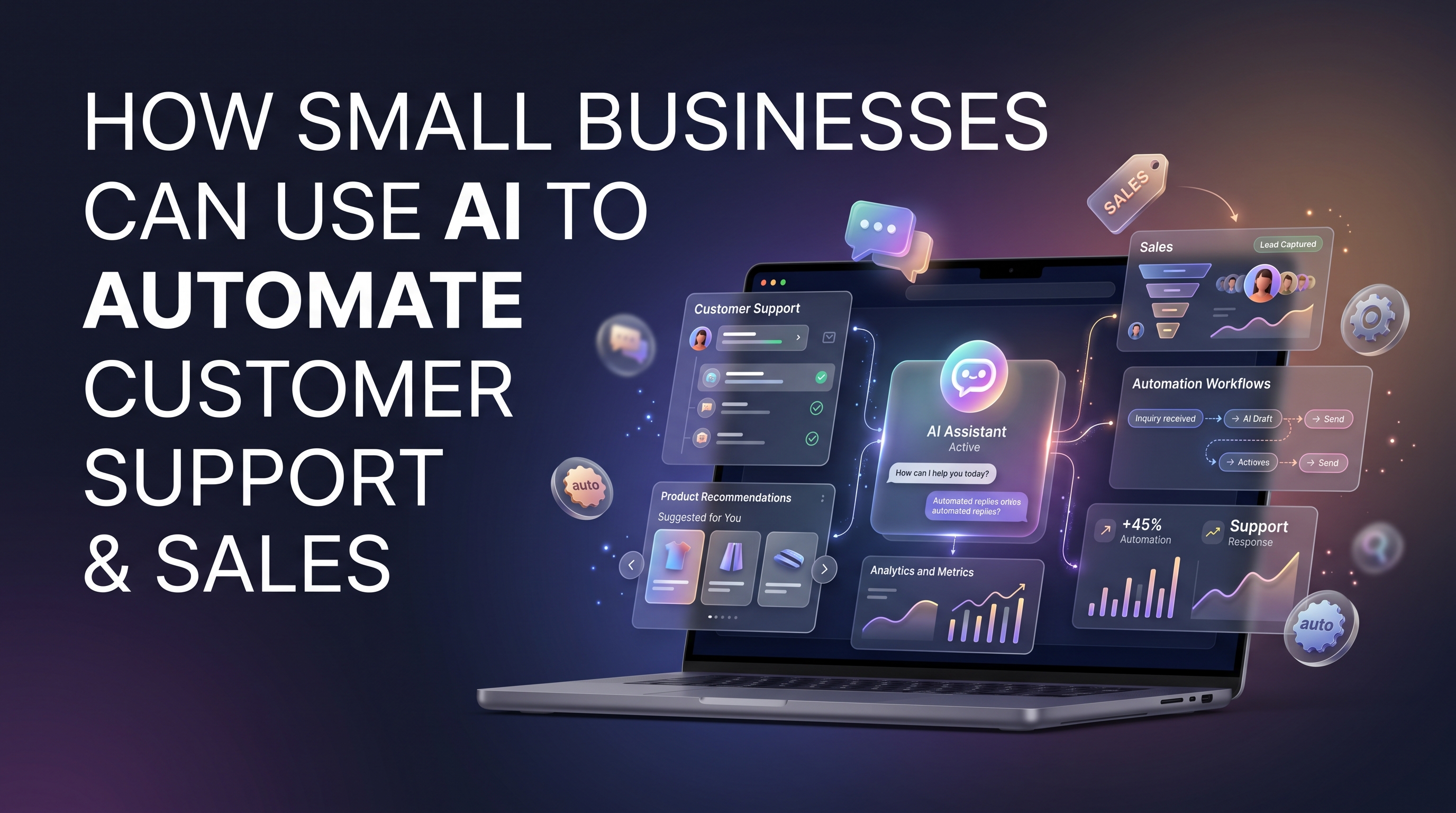
Artificial intelligence is no longer limited to large companies with huge technology budgets. Small businesses can now use AI-powered tools to automate repetitive tasks, respond to customers faster, and support their sales process.
From answering frequently asked questions to recommending products and collecting leads, AI can handle many routine interactions while business owners and employees focus on more important work.
1. Automate Customer Questions
Customers often ask the same questions about products, pricing, delivery, availability, services, and business hours.
An AI-powered website assistant can answer common questions instantly using information provided by the business. This can reduce repetitive manual responses and help customers find information at any time.
- Answer frequently asked questions.
- Explain products and services.
- Provide business hours and contact information.
- Help customers find relevant pages.
- Collect questions that require human support.
2. Use AI as a Sales Assistant
AI can also support the sales process by helping visitors understand products and identify suitable options.
For example, instead of browsing through dozens of products, a customer could ask an AI assistant what product would be suitable for their needs.
The AI can ask follow-up questions, understand the customer's requirements, and suggest relevant products or services.
3. Generate and Qualify Leads
Many websites receive visitors who are interested in a service but leave without contacting the business.
An AI-powered conversational assistant can engage visitors, ask basic qualification questions, and collect information such as their name, email address, requirements, or preferred service.
This information can then be passed to the sales team for follow-up.
4. Provide 24/7 Customer Assistance
Small businesses cannot always have someone available to answer customer questions throughout the day and night.
AI can provide an always-available first layer of support. Customers can get immediate answers to common questions even outside normal business hours.
When a question requires human attention, the AI can guide the customer toward a contact form, support ticket, email, or human representative.
5. Recommend Products and Services
AI can analyze the information a customer provides and help recommend relevant products or services.
For example, an online clothing store could ask about size, style, color, budget, and occasion before suggesting suitable products.
This creates a more personalized shopping experience without requiring an employee to manually assist every visitor.
6. Automate Follow-Ups
Following up with potential customers is an important part of sales, but it can also become repetitive.
AI-powered workflows can help businesses organize leads and trigger follow-up actions based on customer activity.
For example, a business could create workflows for customers who submit an inquiry, request a quote, abandon a purchase, or show interest in a particular service.
7. Turn Customer Conversations Into Useful Insights
Customer conversations contain valuable information about what people want, what problems they experience, and which products they are interested in.
AI can help summarize conversations and identify common questions or recurring problems. Businesses can use these insights to improve their products, website content, support documentation, and sales process.
8. Keep Humans in the Loop
AI automation does not mean removing humans from customer service.
For many businesses, the most practical approach is to let AI handle repetitive and straightforward requests while employees handle complex, sensitive, or high-value conversations.
A good AI workflow should make it easy for a customer to reach a human whenever necessary.
How to Start Using AI in a Small Business
Businesses don't need to automate everything at once. A better approach is to start with one repetitive problem and measure the results.
- Identify the questions customers ask most frequently.
- Choose one customer-support or sales workflow to automate.
- Prepare accurate business and product information.
- Connect the AI assistant to the website or relevant business tools.
- Test the responses before making the system widely available.
- Monitor conversations and improve the system over time.
The Future of AI-Powered Business Websites
Websites are increasingly becoming more than digital brochures. With AI, a website can help answer questions, guide visitors, recommend products, collect leads, and support customers.
For small businesses, this can create an opportunity to provide a more responsive digital experience without requiring a large customer-support team.
Final Thoughts
AI automation is not about replacing every human interaction. It is about reducing repetitive work and helping businesses respond to customers more efficiently.
By starting with simple use cases such as FAQs, lead collection, product recommendations, and follow-ups, small businesses can gradually build a smarter and more efficient digital workflow.
The key is to start small, use accurate information, monitor the results, and keep humans involved where they add the most value.