
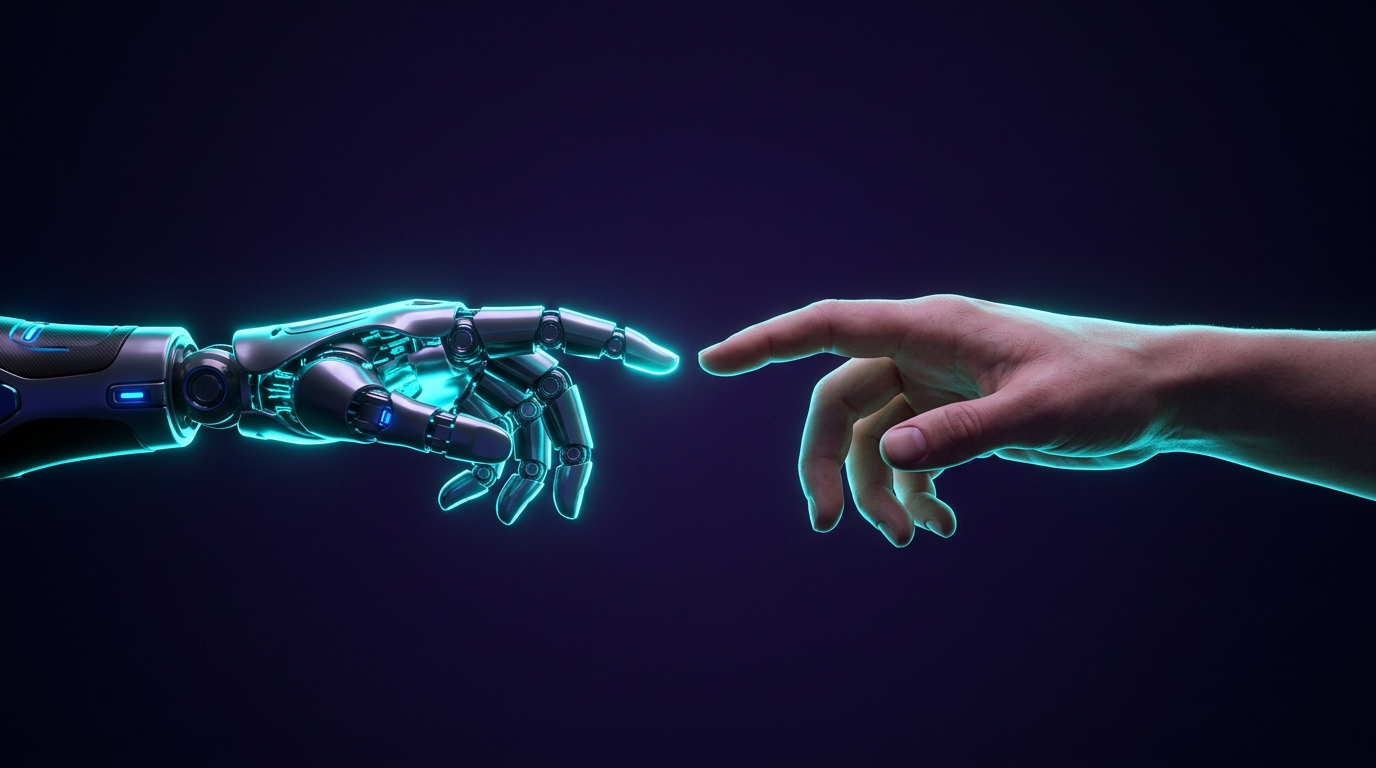
Every few months, a new AI tool arrives and the same fear returns: "Will this replace me?" The honest answer is neither "yes, everyone is doomed" nor "relax, nothing will change." The truth sits in the middle, and understanding it is the difference between being left behind and getting ahead.
AI rarely replaces whole jobs overnight. It replaces tasks. And people who use AI well will replace people who don't.
Jobs Are Bundles of Tasks, Not Single Skills
Think about your own work. A marketer doesn't just "do marketing." They research, write drafts, analyze numbers, attend meetings, persuade clients, and make judgment calls. AI is already strong at some of those pieces and weak at others.
That's the key idea of this whole article: your risk depends on how much of your day is made of tasks that are repetitive, rule-based, and digital. The more of your work looks like that, the more pressure you'll feel.
The Tasks Most at Risk
AI is most effective when the work is predictable and happens on a screen. These areas are changing fastest:
- Routine writing: basic product descriptions, simple summaries, first-draft emails and reports.
- Data entry and processing: copying, sorting, and formatting information.
- Basic customer support: answering the same common questions again and again.
- Simple research and translation: gathering facts and converting text between languages.
- Entry-level code and design tasks: boilerplate code, quick mockups, and template-style graphics.
Notice that these are tasks, not entire careers. A writer, developer, or designer still has plenty left to do. But the "easy" part of the job is shrinking, and that raises the bar for everyone.
The Skills That Stay Valuable
Here's where the good news is. Several human strengths are hard for AI to match, and they become more valuable as AI handles the routine work.
1. Critical Thinking and Judgment
AI can produce ten answers in seconds. Someone still has to decide which one is right, spot what's missing, and take responsibility for the outcome. Good judgment is the new scarce resource.
2. Communication and Persuasion
Negotiating a deal, calming an angry client, leading a team, or telling a story that moves people all depend on trust and emotional intelligence. People buy from and follow people they trust.
3. Creativity With a Point of View
AI can remix what already exists. What stands out is a unique perspective built from your real experiences, taste, and opinions. Generic content is becoming cheap. Original thinking is not.
4. Hands-On and Physical Skills
Electricians, nurses, plumbers, technicians, chefs, and caregivers work in messy, unpredictable physical environments. These jobs are far harder to automate than screen-based ones.
5. Leadership and Relationship Building
Managing people, building networks, mentoring others, and creating a team culture all require human connection that software can't replace.
6. Learning Speed
The most future-proof skill isn't a specific tool. It's the ability to learn new tools quickly and adapt when the ground shifts.
The "Task Test": Check Your Own Risk in 5 Minutes
Try this simple exercise:
- List everything you do in a typical week.
- Mark each task as repetitive, creative or judgment-based, or people-focused.
- Estimate what percentage falls into each group.
If most of your week is repetitive screen work, start building your other skills now. If most of it is judgment and people work, you're in a stronger position, but you should still learn to use AI as a tool.
A Simple 30-Day Plan to Future-Proof Your Career
- Week 1: Pick one AI tool and use it daily for small tasks like drafting, summarizing, or brainstorming.
- Week 2: Identify the most repetitive part of your job and try to automate or speed it up.
- Week 3: Invest time in a human skill: public speaking, writing with your own voice, negotiation, or leadership.
- Week 4: Show your results. Share what you learned, build a small portfolio, or tell your manager how AI improved your output.
Common Mistakes to Avoid
- Ignoring AI completely. Avoiding it won't protect you. It only makes the gap bigger.
- Trusting AI blindly. It can be confidently wrong. Always check important facts and details.
- Panicking and quitting too early. Change takes time. Use that time to learn.
- Only learning tools, not thinking skills. Tools change every year. Judgment and communication last.
The Bottom Line
AI will change many jobs, remove some tasks, and create new roles that don't exist yet. But history shows that people who adapt to new technology tend to benefit from it. The winners won't be those who fear AI or those who depend on it blindly. They'll be the ones who combine human strengths with smart use of AI.
So don't ask only, "Will AI take my job?" Ask the better question: "How can I become the person who does my job best with AI?"
What do you think? Which of your daily tasks do you expect AI to change first? Share your thoughts in the comments.